- Proudly serving Homeowners, Strata, Government, Property Managers and Business Owners since 2009
- 24/7 Emergency Callout
- 0415 463 647
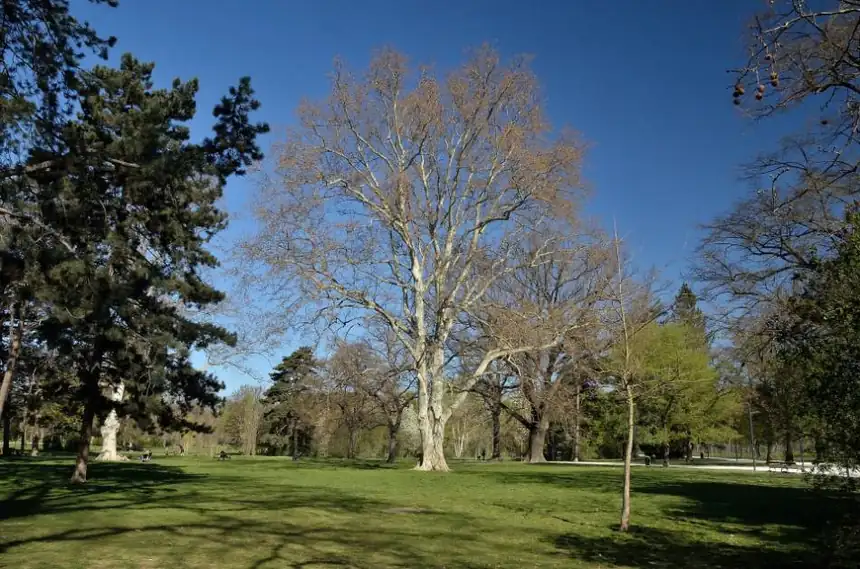
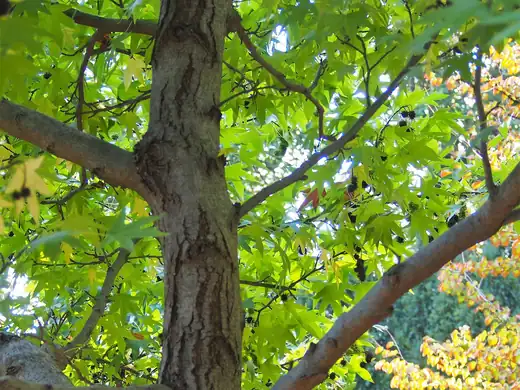
Unmistakable camouflage bark that flakes away in plates to leave a patchwork of cream, olive and grey. Broad maple like leaves with five shallow lobes, larger and coarser than a Liquidambar’s. Spiky bristly seed balls hang on strings through winter, often two or three to a stalk.
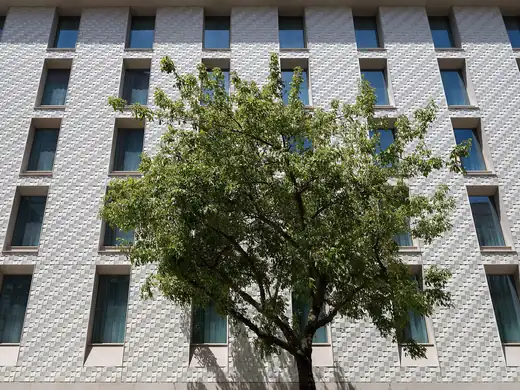
One of Sydney’s dominant street trees, planted heavily through the Inner West, City of Sydney, Woollahra, Waverley, Strathfield and Burwood, and along arterial roads across the whole city.
The first question on every London Plane job is ownership, because the great majority are council street trees and cannot be touched under a private tree permit. On private land it is a protected tree everywhere on this list. Crews should mask up: the leaf and seed hairs are a genuine respiratory irritant during dismantling, and far worse in spring.
Status below is for a tree on private land that has passed the council’s size threshold. Heritage items, heritage conservation areas, significant tree registers, biodiversity mapping and conditions of development consent override every exemption shown here.
If it is on the nature strip it belongs to Council, and health impact alone is rarely enough for removal. Contact the council’s street tree team, who will usually assess it and may offer pruning or, in persistent cases, replacement at the end of the tree’s useful life.
No, though they are often confused. Liquidambar has star shaped leaves with five sharp points and brilliant red autumn colour. London Plane has broader, blunter lobes and flaking camouflage bark, and its autumn colour is a dull brown.
Yes. London Plane is not on any exempt species list across the councils Pro Climbing Tree Services covers, so it is protected once it passes the council’s size threshold.