- Proudly serving Homeowners, Strata, Government, Property Managers and Business Owners since 2009
- 24/7 Emergency Callout
- 0415 463 647
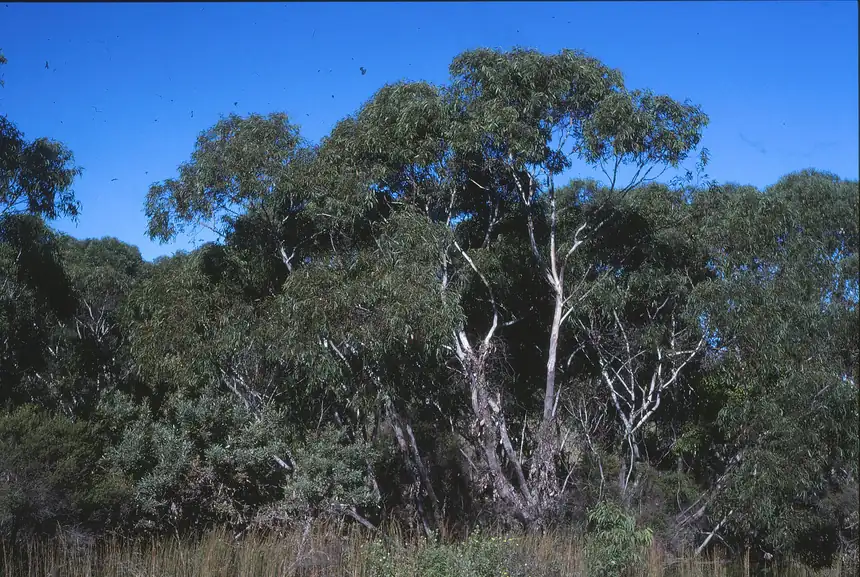
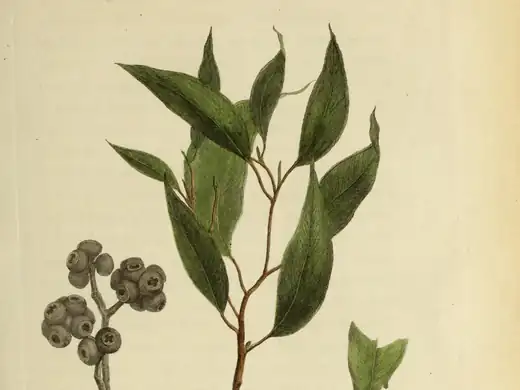
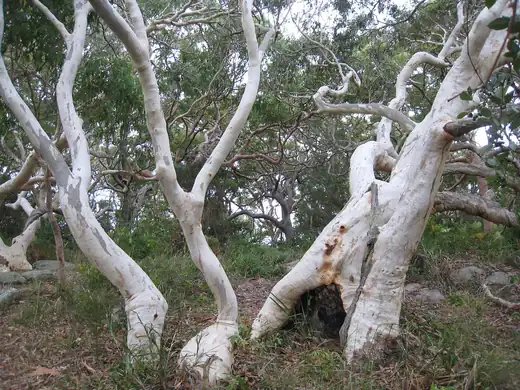
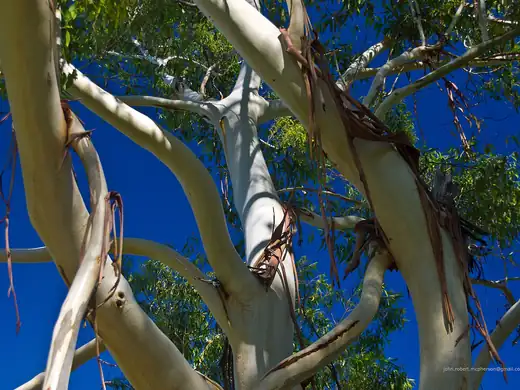
Named for the dark rough fibrous bark on the lower trunk, which gives way abruptly to smooth white or cream bark on the upper trunk and branches. Leaves are sickle shaped and glossy on both surfaces. Clusters of white flowers appear from spring to midsummer.
A dominant forest tree through the Northern Beaches, Hornsby Shire and the northern parts of Ku-ring-gai, especially on sandy and shale influenced soils. Very common on bush fringe properties in Belrose, Terrey Hills, Frenchs Forest, Hornsby Heights and Berowra.
A technical removal in most suburban settings. Bush fringe blocks frequently sit inside biodiversity mapping, so the assessment usually needs to cover ecological value as well as tree condition. Where the property qualifies for the 10/50 Vegetation Clearing scheme the pathway can be different, so check the RFS 10/50 tool for the address first.
Status below is for a tree on private land that has passed the council’s size threshold. Heritage items, heritage conservation areas, significant tree registers, biodiversity mapping and conditions of development consent override every exemption shown here.
Yes in every council covered here. It is a protected native and is not on any exempt species list. Bush fringe properties may also trigger biodiversity or endangered ecological community controls on top of the standard permit.
Only if the property sits inside a 10/50 Vegetation Clearing Entitlement Area and the tree is within 10 metres of an external wall of the home. Check the NSW Rural Fire Service 10/50 tool before assuming it applies.