- Proudly serving Homeowners, Strata, Government, Property Managers and Business Owners since 2009
- 24/7 Emergency Callout
- 0415 463 647
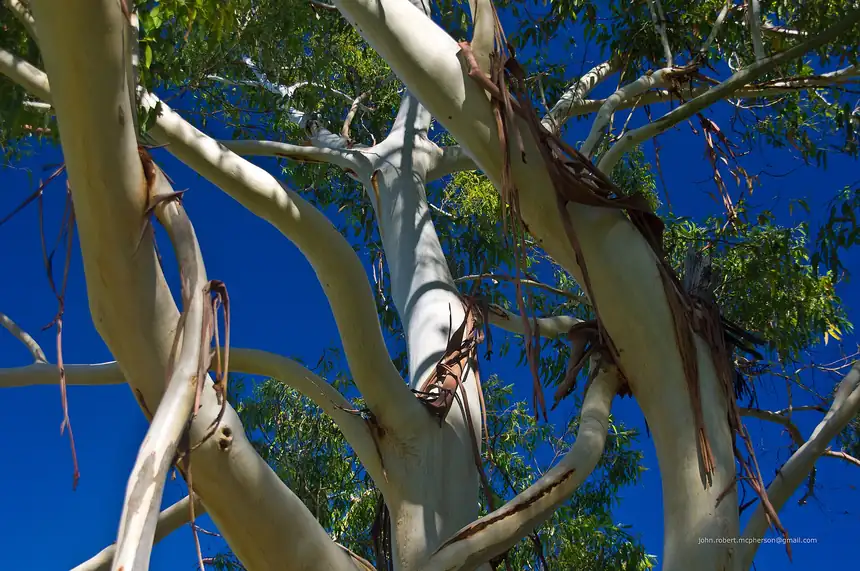
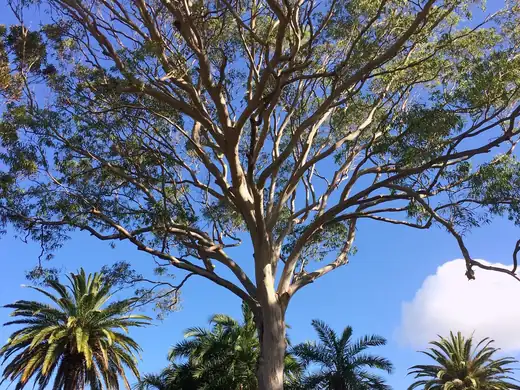
A tall straight trunk with smooth blue grey to white bark that sheds in long ribbons, usually over a short stocking of rough bark at the base. Adult leaves are narrow, lance shaped and glossy dark green above with a paler underside. Small white flowers appear in clusters of seven to eleven through summer, followed by small woody gumnuts.
Common through the Northern Beaches, Ku-ring-gai and Hornsby on sheltered slopes and in gullies with deeper soils. Widely retained as a canopy tree in older suburbs such as Turramurra, Pymble, Wahroonga and St Ives, and a frequent street and reserve tree across the North Shore.
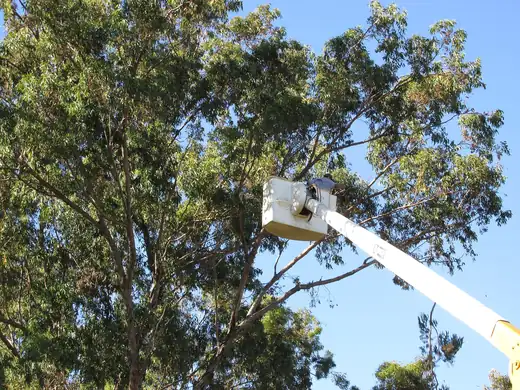
Almost always a full climbing and sectional dismantle rather than a straight fell, because of size and proximity to structures. Expect crane or elevated work platform hire on constrained blocks, substantial green waste volume and a large diameter stump. Protected in virtually every council on this list, so allow application time before the job is booked.
In almost every case, no. It is a native species and is not on any exempt species list across the councils Pro Climbing Tree Services works in. You will need a tree permit, or a development application if the property is heritage listed or in a heritage conservation area.
A healthy, well maintained specimen is not inherently dangerous, but the species does shed limbs in hot weather and can fail in storms. An arborist inspection will identify decay pockets, included bark unions and deadwood that raise the risk.
Hard topping or lopping a Blue Gum creates weakly attached regrowth and long term decay. Crown thinning or selective reduction within the 10% canopy limit most councils allow is the safer approach.