- Proudly serving Homeowners, Strata, Government, Property Managers and Business Owners since 2009
- 24/7 Emergency Callout
- 0415 463 647
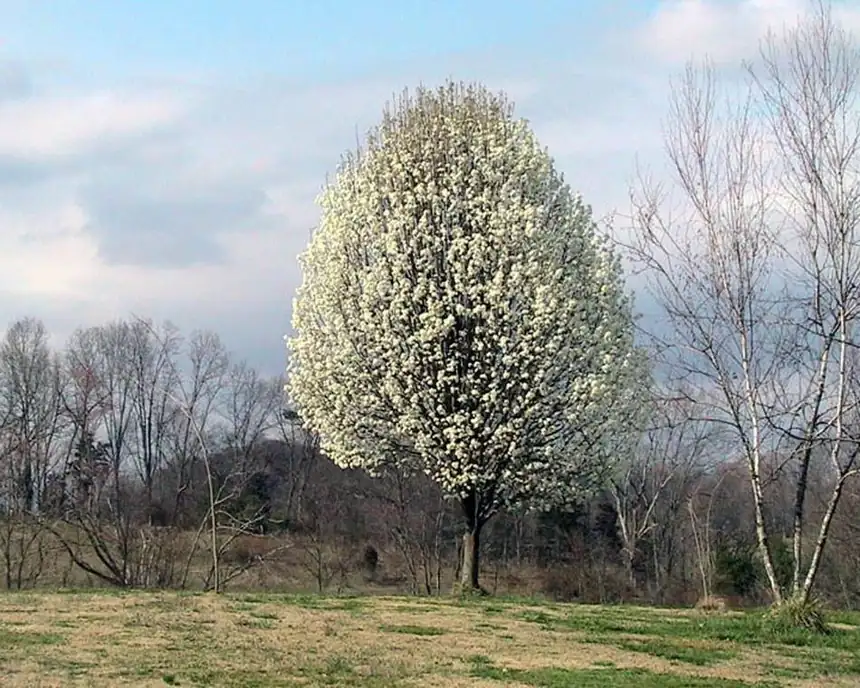
A tidy upright teardrop shape covered in white blossom in early spring, before the leaves. Leaves are glossy with wavy margins and turn deep red and purple in autumn. Small hard brown fruit, nothing like an edible pear. The spring blossom carries an unpleasant smell.
The default feature tree of newer estates and renovated gardens across the Hills District, Blacktown, Ryde and the North Shore, and used heavily in recent streetscape plantings.
Usually a quick job given the modest size, but check ownership first because so many are recent street plantings. The typical call out is storm damage: the narrow upright unions are structurally poor and mature specimens shed large limbs. It is not on any exempt list, so a permit applies once the tree passes the council’s size threshold.
Sometimes, but Callery Pear splits because of how it is built, with tight upright unions full of included bark. Once one fails the remaining unions are usually carrying the same defect. An arborist inspection will tell you whether reduction is worth it or whether removal is the sensible call.
No. Fruit tree exemptions cover trees grown for edible fruit. Bayside names fruiting Pyrus specifically, which does not extend to ornamental non-fruiting cultivars.