Trees Near House can improve shade, privacy, and overall curb appeal. But choosing the wrong tree in the wrong spot can lead to serious issues over time. From cracked foundations to blocked pipes, tree problems near houses are more common than many homeowners realise.
In Australia, certain species are known for aggressive root systems or fast growth, making them unsuitable for planting close to buildings. Understanding which trees to avoid and what to plant instead can save you from expensive repairs in the future.
Why a Trees Near House Can Cause Serious Problems
Trees are living systems that grow both above and below the ground. While branches are visible, roots can spread far beyond the canopy.
Trees with invasive roots in Australia can:
- Damage to building foundations
- Lift driveways and pathways
- Block underground pipes
- Affect drainage systems
- Cause structural instability over time
These problems usually develop slowly, which is why many homeowners do not notice them until the damage is already done.
Trees with Aggressive Roots to Avoid
Some trees are more likely to cause damage due to their root behaviour and size.
Ficus (Fig Trees)
Ficus species are well known for their strong and invasive root systems.
- Roots spread widely in search of water
- Can crack pipes and foundations
- Not suitable for residential gardens near structures
They are best planted far away from buildings or avoided altogether in small properties.
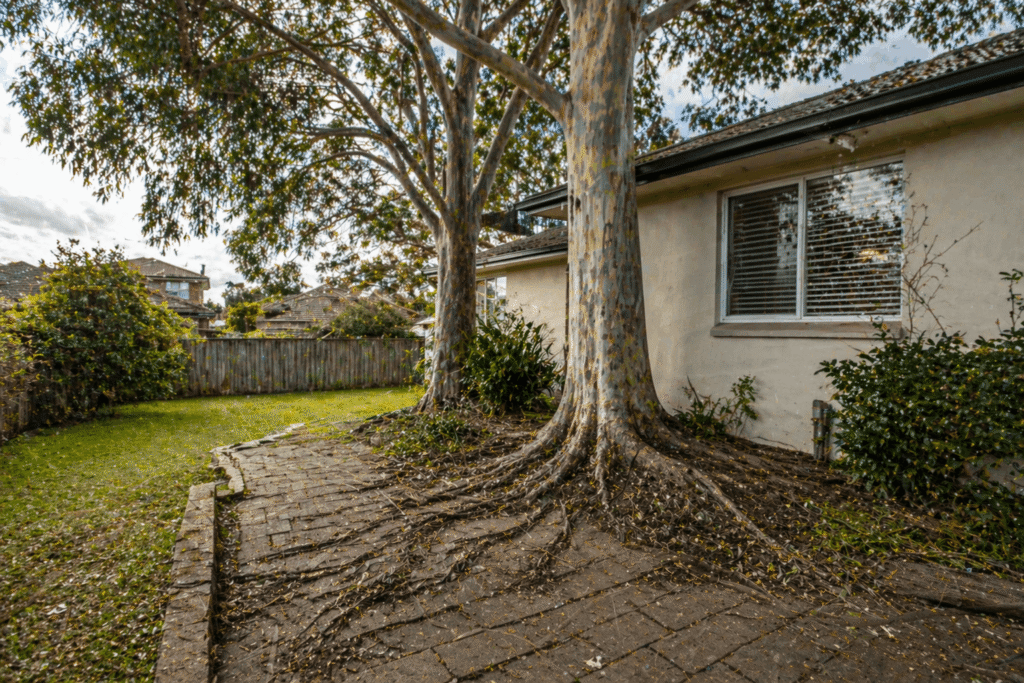
Eucalyptus (Large Gum Trees)
While native and beautiful, many eucalyptus trees grow very large.
- Extensive root systems
- High water demand
- Risk of falling branches
Planting large gum trees too close to a house can create both structural and safety concerns.
Willow Trees
Willows are fast-growing and highly water-seeking trees.
- Roots invade drainage systems
- Can travel long distances underground
- Cause severe pipe blockages
They should never be planted near homes, septic systems, or underground utilities.
Bamboo
Although technically a grass, bamboo can behave like an invasive tree.
- Rapid spreading roots
- Difficult to control once established
- Can damage nearby structures
Clumping varieties are safer, but running bamboo should be avoided near houses.
Jacaranda
Jacaranda trees are popular for their purple flowers but can cause issues.
- Wide root spread
- Surface roots that lift paving
- Large canopy requiring space
They are better suited to open areas rather than close to buildings.
Common Signs of Tree Damage Near Homes
If you already have trees planted close to your house, watch for early warning signs.
- Cracks in walls or foundations
- Uneven paving or lifted driveways
- Blocked or damaged pipes
- Soil movement around the base of the house
These signs may indicate that tree roots are interfering with your property.
If you notice these issues, it may be worth exploring professional tree removal services in Sydney to prevent further damage.
Safe Trees to Plant Near a House in Australia
Not all trees pose a risk. Choosing the right species can give you the benefits of greenery without the downsides.
Safe trees to plant near a house in Australia typically have:
- Non-invasive root systems
- Slower growth rates
- Compact size
- Low water demand
Some good options include:
- Crepe Myrtle
- Japanese Maple
- Olive trees
- Dwarf citrus trees
- Lilly Pilly (with proper maintenance)
These trees are less likely to cause structural issues when planted at a reasonable distance.
How Far Should Trees Be Planted from a House?
A general rule is to plant trees at a distance equal to at least half their mature height.
For example:
- Small trees: 3 to 5 metres away
- Medium trees: 5 to 8 metres away
- Large trees: 10 metres or more
This spacing allows roots and branches to grow without interfering with your home.
Managing Existing Problem Trees
If you already have trees with aggressive roots near your property, there are a few options.
- Regular pruning to control growth
- Root barriers to limit spread
- Monitoring for structural impact
- Professional assessment
In some cases, removal may be the safest long-term solution.
For expert advice and safe handling, Pro Climbing Tree Services can assess your situation and recommend the best course of action.
Preventing Future Issues
Planning ahead is the best way to avoid problems.
- Research tree species before planting
- Consider mature size, not just current size
- Avoid planting directly over pipes or near foundations
- Get professional advice if unsure
Taking these steps can help you enjoy your garden without worrying about damage.
Final Thoughts
Choosing the right trees for your property is more important than it may seem. While trees add beauty and value, planting the wrong species too close to your home can lead to costly repairs.
Understanding trees with invasive roots in Australia and avoiding those with aggressive growth habits is key. With the right planning, you can create a safe and attractive outdoor space.
If you are dealing with trees damaging foundations or need expert guidance, Pro Climbing Tree Services can help you make the right decision.To get started, you can Request a Quote and take the next step toward protecting your home and landscape.