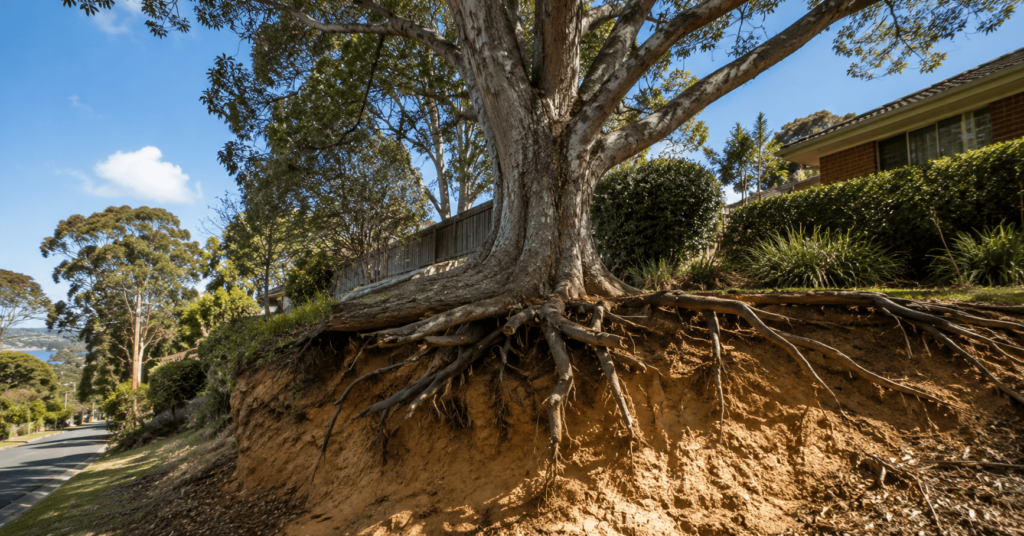
Heavy rain, sloping blocks, poor drainage, and ongoing soil movement can slowly undermine even the healthiest-looking trees. While most homeowners focus on what’s happening above the ground, the real danger often starts below it. As soil washes away, tree roots lose the support they rely on, increasing the risk of instability, branch failure, or even complete tree collapse.
In Sydney, especially across the Northern Beaches, North Shore, and hilly suburbs, soil erosion is a common issue after prolonged rainfall and storms. Understanding how soil erosion affects tree stability can help you identify hazards early and avoid costly property damage.
At Pro Climbing Tree Services, our qualified arborists regularly inspect trees affected by erosion and provide practical solutions to keep properties safe while preserving healthy trees whenever possible.
Why Healthy Soil Matters for Tree Stability
Most people assume a tree’s strength comes from its trunk. In reality, its stability depends largely on an extensive root system anchored firmly in surrounding soil.
Tree roots perform several critical functions:
- Anchor the tree against wind forces
- Absorb water and nutrients
- Store energy for growth
- Stabilise surrounding soil
When soil begins washing away, these roots lose both support and protection. Even a mature tree can become unstable if enough soil disappears around its root plate.
How Soil Erosion Weakens Trees
1. Root Support Is Lost
The biggest consequence of erosion is the gradual removal of soil surrounding structural roots.
As soil disappears:
- Roots become exposed
- Fine feeder roots dry out
- Large anchoring roots lose grip
- Tree movement increases during strong winds
This directly impacts soil erosion tree stability, particularly for mature gum trees, figs, and large native species common throughout Sydney.
2. Exposed Roots Become Vulnerable
One of the clearest warning signs is tree roots exposed by erosion.
Exposed roots are vulnerable to:
- Drying out
- Mechanical damage from foot traffic
- Lawn mower injuries
- Disease and fungal infections
- Temperature extremes
Unlike underground roots, exposed roots cannot perform efficiently, leading to long-term decline.
3. Water Pools Around Remaining Roots
Ironically, erosion often creates drainage problems.
Instead of soaking evenly into the ground, water channels through exposed areas, leaving some roots waterlogged while others become dry.
Poor drainage encourages:
- Root rot
- Oxygen starvation
- Fungal infections
- Reduced root strength
Healthy roots require both moisture and oxygen.
4. The Entire Root Plate Can Shift
As erosion progresses, the entire soil mass holding the tree upright may begin moving downhill.
This creates serious unstable tree soil issues, particularly on:
- Sloping properties
- Retaining wall edges
- Creek banks
- Coastal areas
- Newly excavated sites
Even if the trunk appears straight, underground movement may already be occurring.
Common Causes of Soil Erosion Around Trees
Several factors contribute to soil loss around tree roots.
Heavy Rainfall
Sydney’s intense storms can remove significant amounts of topsoil within hours.
Steep Blocks
Properties built on slopes naturally experience faster runoff.
Construction Work
Excavation changes water flow and may remove soil supporting established trees.
Poor Drainage
Concentrated water flow accelerates erosion around root systems.
Bare Ground
Areas without grass, mulch or ground cover lose soil much faster during rain.
Warning Signs a Tree Is Becoming Unstable
Many unstable trees provide warning signs before failure occurs.
Watch for:
- Exposed roots
- Fresh soil cracks around the base
- Leaning that has recently developed
- Raised soil on one side of the trunk
- Roots visible above ground
- Dead branches appearing suddenly
- Loose or rocking movement during wind
These symptoms may indicate significant erosion impact on trees and should be assessed by a qualified arborist promptly.
Can Soil Erosion Cause a Tree to Fall?
Yes.
One of the leading causes of tree falling due to erosion is the gradual weakening of the root plate.
When strong winds combine with:
- Saturated soil
- Exposed roots
- Reduced anchorage
the tree may suddenly uproot.
This often occurs after several days of heavy rain rather than during the first storm.
Trees Most Vulnerable to Soil Erosion
Some species are naturally more susceptible depending on their root structure.
Higher-risk trees include:
- Large eucalyptus
- Fig trees
- Liquidambar
- Poplar
- Willow
- Mature pine trees
Trees growing on embankments or retaining walls require particularly close monitoring.
How Arborists Assess Erosion Damage
A professional inspection goes well beyond looking at the trunk.
An arborist may assess:
- Root exposure
- Soil movement
- Drainage patterns
- Lean progression
- Crown balance
- Root plate integrity
- Signs of root decay
- Future failure risk
This helps determine whether the tree can be preserved or requires risk reduction.
Can an Unstable Tree Be Saved?
Often, yes.
Depending on the severity, solutions may include:
Soil Regrading
Replacing lost soil helps restore root protection.
Mulching
Organic mulch reduces future erosion while improving moisture retention.
Drainage Improvements
Redirecting stormwater prevents ongoing soil loss.
Selective Pruning
Selective tree pruning reduces canopy weight and wind loading on weakened roots.
Root Zone Protection
Installing barriers prevents further soil disturbance during landscaping.
Where structural roots have been severely compromised, removal may ultimately be the safest option.
Preventing Soil Erosion Around Trees
Property owners can reduce future erosion by:
- Installing proper drainage
- Applying mulch around root zones
- Planting ground covers
- Avoiding excavation near mature trees
- Preventing water runoff from concentrating around trunks
- Scheduling regular tree inspections after severe storms
Preventative maintenance is far less expensive than emergency tree removal.
When Should You Call an Arborist?
Arrange a professional inspection if you notice:
- Roots becoming exposed
- Fresh leaning
- Significant soil washout
- Cracking ground around the trunk
- Recent excavation nearby
- Storm damage affecting the tree
Early intervention often allows problems to be corrected before the tree becomes hazardous.
Why Sydney Properties Are More Susceptible
Many Sydney suburbs feature:
- Sloping landscapes
- Sandstone soils
- Ageing native trees
- Coastal erosion
- Increasingly intense rainfall events
These conditions make soil erosion tree stability an important safety consideration for homeowners, strata managers, and commercial property owners alike.
Regular inspections after heavy rain can identify developing problems before they become emergencies.
Why Choose Pro Climbing Tree Services?
With over 15 years of experience servicing Sydney, Pro Climbing Tree Services understands how local conditions affect tree health and stability. Our qualified arborists carry out thorough risk assessments, provide honest recommendations, and prioritise preserving healthy trees wherever possible. When removal is the safest option, we complete the job efficiently with safety at the forefront.
Whether you’re concerned about tree roots exposed by erosion, ongoing soil loss around tree roots, or a potentially unstable tree after heavy rain, we’re here to help. We also offer tree pruning, emergency tree services, stump grinding, and complete tree removal across Sydney.
Need a Professional Tree Assessment?
If recent storms or soil erosion have affected trees on your property, don’t wait until they become a safety risk. Contact Pro Climbing Tree Services for a professional inspection and expert advice on protecting your trees and your property. We provide prompt service, free quotes, and trusted arborist solutions throughout Sydney.