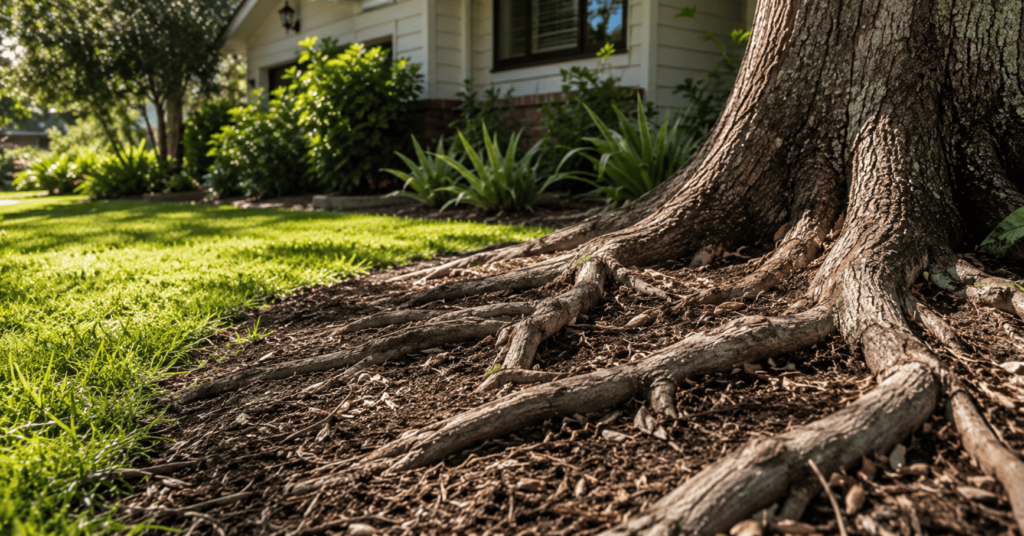
If you’ve noticed tree roots coming above ground, you’re not alone. Surface roots are a common issue for many Sydney homeowners, particularly around mature gum trees, figs, jacarandas, and other large species. While exposed roots aren’t always a sign that something is wrong, they can sometimes indicate underlying issues that affect both your tree’s health and your property’s safety.
Understanding why tree roots come above ground can help you determine whether the problem is simply natural growth or whether it’s time to call a qualified arborist.
At Pro Climbing Tree Services, we regularly assess exposed root systems across Sydney, helping homeowners protect their trees while reducing safety risks.
Is It Normal for Tree Roots to Grow Above Ground?
Yes in many cases, it is completely normal.
Most trees develop a combination of:
- Deep anchoring roots
- Shallow feeder roots
The shallow roots sit close to the surface because this is where oxygen, moisture, and nutrients are most readily available. As trees mature, these roots naturally become more visible.
However, roots that suddenly become exposed or continue rising rapidly may indicate an underlying problem.
Why Are My Tree Roots Coming Above Ground?
There are several reasons why tree roots show above the soil.
1. Soil Erosion
One of the most common causes is soil erosion.
Heavy rainfall, poor drainage, sloping blocks, or water runoff can gradually wash away the topsoil, exposing roots that were previously underground.
Signs include:
- Roots becoming visible after storms
- Washed-out garden beds
- Soil collecting downhill
- Exposed roots spreading across the surface
2. Natural Tree Growth
Many large tree species naturally develop surface roots.
Common examples include:
- Sydney Red Gum
- Moreton Bay Fig
- Brush Box
- Jacaranda
- Liquidambar
As these trees mature, their structural roots gradually thicken and push closer to the surface.
3. Compacted Soil
When soil becomes compacted by:
- Foot traffic
- Vehicles
- Construction
- Heavy landscaping
roots struggle to grow downward.
Instead, they spread horizontally where oxygen is easier to access.
4. Shallow Soil Conditions
Many Sydney properties have shallow soils sitting above sandstone or clay.
When deeper soil isn’t available, roots simply grow across the surface instead of penetrating deeper into the ground.
5. Overwatering
Constant watering keeps moisture concentrated near the surface.
Rather than searching deeper for water, roots remain close to the topsoil, eventually becoming visible.
6. Poor Planting Practices
Trees planted too high or with insufficient soil coverage often develop exposed roots much earlier than properly planted trees.
Improper landscaping around the base can also contribute.
Are Exposed Tree Roots Dangerous?
Not always.
However, surface tree roots can create several issues.
They may:
- Become trip hazards
- Lift driveways or paving
- Damage retaining walls
- Invade drainage systems
- Dry out during hot weather
- Become susceptible to disease
If numerous structural roots are exposed, the tree’s long-term stability may also be affected.
Can I Cut Off Surface Tree Roots?
Generally, no.
Removing roots without professional advice can seriously damage a tree.
Large roots provide:
- Structural stability
- Water transport
- Nutrient storage
- Wind resistance
Cutting them may:
- Destabilise the tree
- Increase the risk of disease
- Cause canopy decline
- Lead to branch dieback
- Make the tree unsafe during storms
Only a qualified arborist should determine whether root pruning is appropriate.
How Can I Protect Exposed Tree Roots?
If the roots are healthy, there are several ways to protect them.
Apply Organic Mulch
A layer of mulch helps:
- Retain moisture
- Reduce soil erosion
- Protect roots from temperature extremes
- Improve soil health
Keep mulch away from direct contact with the trunk.
Improve Drainage
Redirecting excess stormwater reduces further soil loss and prevents additional root exposure.
Add Quality Topsoil
Where appropriate, an arborist may recommend carefully adding soil over exposed roots.
This should be done gradually and only where suitable, as covering roots too deeply can sometimes create additional problems.
Reduce Soil Compaction
Avoid driving, parking, or storing heavy materials around the tree’s root zone.
When Are Exposed Roots a Sign of a Bigger Problem?
Contact an arborist if you notice:
- Roots suddenly appearing after heavy rain
- Significant soil erosion
- A tree beginning to lean
- Cracking soil around the trunk
- Dead branches developing
- Fungal growth near exposed roots
- Roots lifting hard surfaces rapidly
These symptoms may indicate structural instability or declining tree health.
Which Trees Commonly Produce Surface Roots?
Many popular Sydney trees naturally develop visible roots, including:
- Gum trees
- Moreton Bay figs
- Brush Box
- Jacarandas
- Liquidambar
- Poplars
- Camphor Laurels
Their root systems spread widely to support large canopies and absorb moisture efficiently.
How Arborists Assess Exposed Tree Roots
A professional tree assessment considers much more than what’s visible.
An arborist will inspect:
- Root health
- Soil condition
- Drainage
- Tree stability
- Lean progression
- Signs of disease
- Potential property damage
- Long-term risk
This allows informed recommendations that prioritise both safety and tree preservation.
Can Surface Roots Be Prevented?
While you can’t completely stop mature trees from developing surface roots, you can reduce future problems by:
- Maintaining healthy soil
- Improving drainage
- Applying mulch annually
- Avoiding unnecessary excavation
- Preventing soil erosion
- Scheduling regular arborist inspections
Proper tree care from an early stage often minimises future root-related issues.
Why Sydney Homes Often Experience Surface Root Problems
Many Sydney suburbs have conditions that encourage shallow root growth, including:
- Sandstone-based soils
- Clay subsoils
- Sloping blocks
- Mature native trees
- Heavy seasonal rainfall
Combined, these conditions make exposed tree roots a common issue across residential properties.
Why Choose Pro Climbing Tree Services?
With over 15 years of experience, Pro Climbing Tree Services provides expert tree inspections, root assessments, pruning, removals, and emergency tree services across Sydney. Our qualified arborists understand local tree species, soil conditions, and council requirements, allowing us to recommend practical tree removal solutions that prioritise safety while preserving healthy trees whenever possible.
Whether you’re concerned about tree roots above ground, property damage, or long-term tree stability, our experienced team is here to help.
Need Your Tree Roots Assessed?
If you’ve noticed exposed roots, lifting paving, leaning trees, or soil erosion around your property, don’t ignore the warning signs. Contact Pro Climbing Tree Services for a professional tree assessment and expert advice. We’ll identify the cause, explain your options, and help keep your property safe with honest, reliable arborist services across Sydney.