- Proudly serving Homeowners, Strata, Government, Property Managers and Business Owners since 2009
- 24/7 Emergency Callout
- 0415 463 647
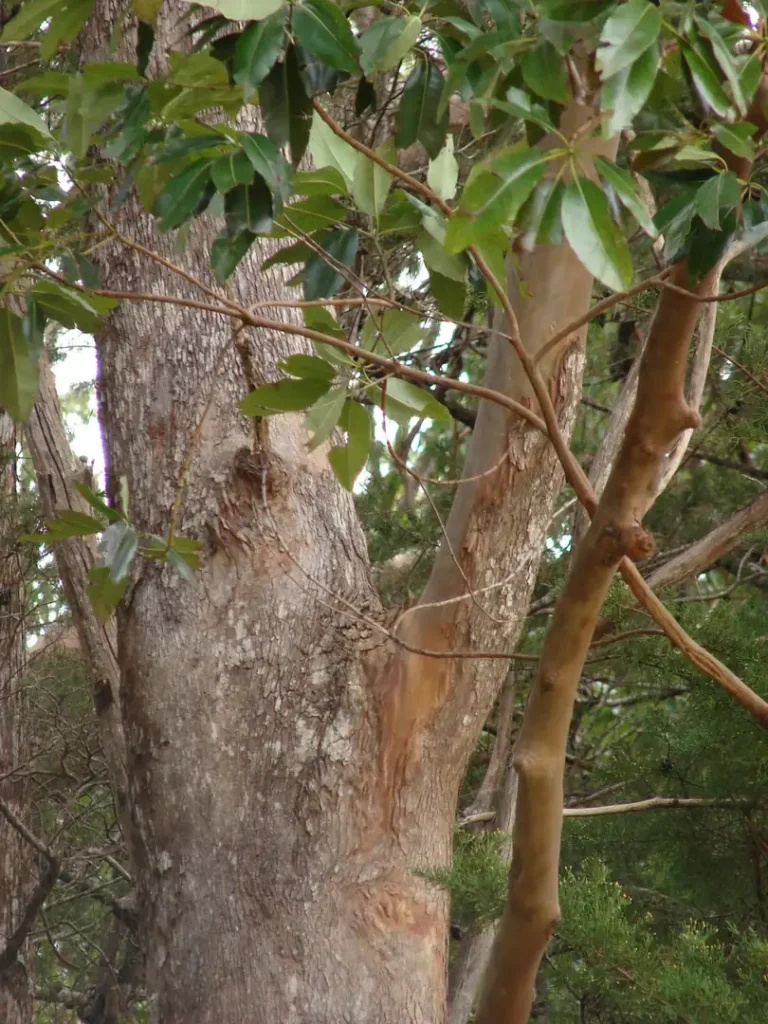
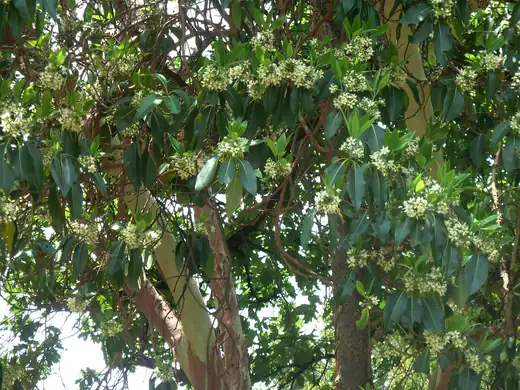
Thick fibrous stringy bark in a distinctive reddish brown, soft enough to press a thumb into. Leaves grow in opposite pairs, dark green on top and noticeably whitish underneath. Fused clusters of woody fruit are unique among Sydney natives.
A key component of Sydney Turpentine Ironbark Forest, found through Ku-ring-gai, Hornsby, Lane Cove, Ryde and parts of the Inner West on shale and shale sandstone transition soils.
One of the hardest removals to get approved in Sydney. Sydney Turpentine Ironbark Forest is a critically endangered ecological community, and a Turpentine growing within a remnant will usually need an ecological assessment on top of the arborist report. The timber is also extremely dense, which affects both cutting time and green waste costs.
Less than five per cent of Sydney Turpentine Ironbark Forest remains. Individual trees are often the last remnants of that community on a block, so councils in Ku-ring-gai, Hornsby, Lane Cove and Ryde treat them as high value.
Yes, and it is usually the more approvable option. Most councils allow up to 10% canopy pruning in a 12 month period, with Willoughby capping it at 10% over five years and City of Sydney at 5%.